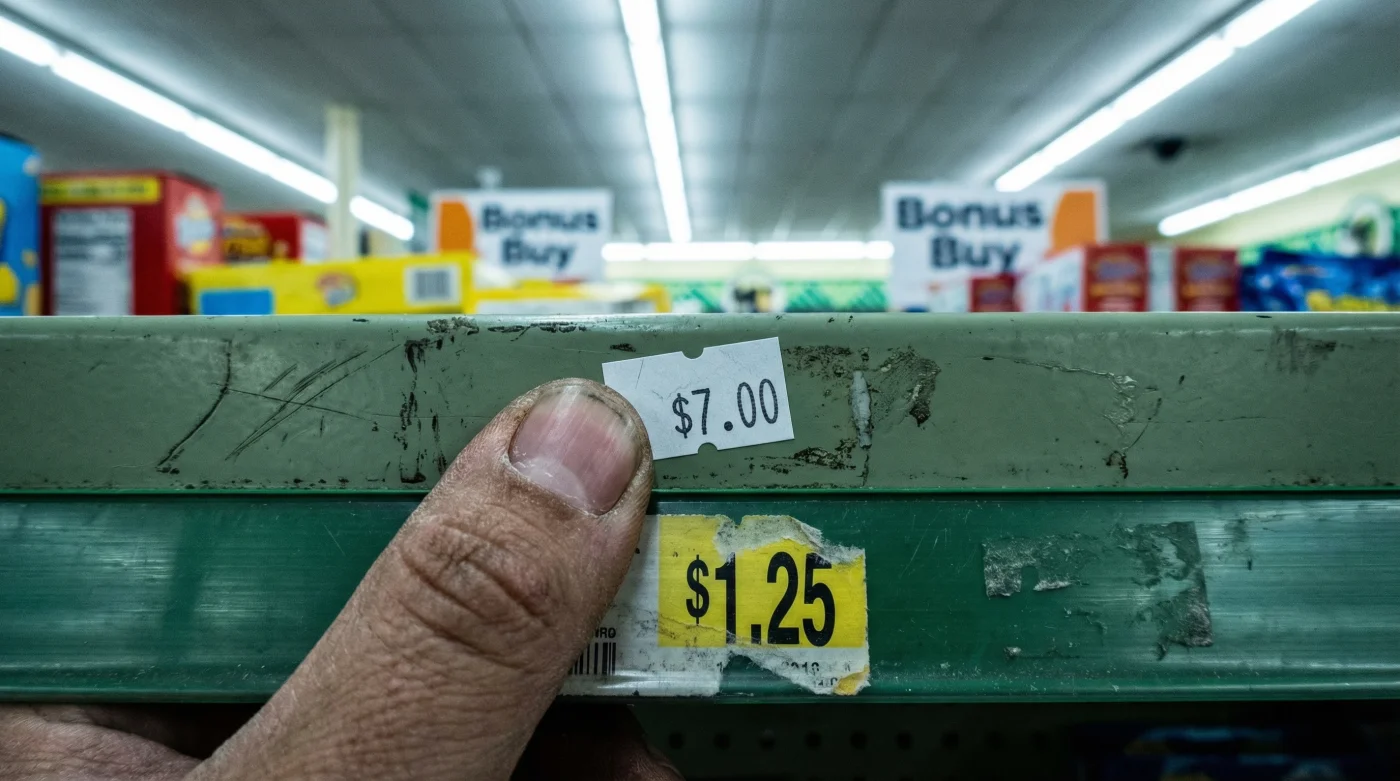
For millions of American families, the bright green signage of Dollar Tree has long stood as a seemingly immutable safe harbor against the rising tides of inflation. It was the last bastion of the true single-price retail model, a place where mental math was unnecessary because every item on every shelf cost exactly one dollar. However, that era has been quietly dismantling itself, first with the shift to the $1.25 baseline, and now with a jarring leap that shatters the brand’s historical identity. A new nationwide rollout is pushing price caps to seven dollars, creating a fundamental friction between consumer expectation and economic reality.
This is not merely a localized experiment but a structural overhaul of the discount retail landscape designed to capture a demographic that has arguably outgrown the ‘treasure hunt’ for cheap trinkets. While the headline generates immediate economic anxiety, the reality inside the aisles is far more complex. The introduction of these higher price points allows for the stocking of inventory that was previously impossible to source, yet it introduces a dangerous new variable: the risk of paying premium prices in a discount environment. The key to surviving this shift lies in understanding exactly which categories are hitting the $7 mark and recognizing the hidden ‘value traps’ waiting on the shelves.
The Anatomy of the Multi-Price Strategy
The transition to a multi-price model, often referred to internally as the ‘Plus’ strategy, is a calculated response to aggressive supply chain costs and the desire to compete with big-box retailers like Walmart and Target. By breaking the $1.25 glass ceiling, Dollar Tree can now introduce National Brands and larger pack sizes that act as ‘basket builders’—items that significantly increase the average transaction value. This is a deliberate move away from the ‘allowance money’ business model toward becoming a primary grocery destination.
Comparing the Old vs. New Consumer Economy
Understanding who wins and who loses in this new pricing architecture is essential for strategic shopping. The table below outlines the shift in target audience and benefit analysis.
| Target Profile | Old Model ($1.25 Cap) | New Model (Up to $7.00) |
|---|---|---|
| Budget Shopper | Guaranteed lowest price; low risk. | Requires unit-price calculation; higher risk of overpaying. |
| Convenience Buyer | Limited selection; relied on generic brands. | Access to full-size Name Brands and frozen proteins. |
| Retail Strategy | Volume-driven; thin margins. | Margin-driven; diverse inventory capability. |
While this expansion introduces variety, it fundamentally changes the store’s layout, forcing shoppers to be vigilant about shelf tags rather than assuming a blanket price.
Deconstructing the $7 Price Point: Where the Money Goes
- The Kate Middleton photo error forces major agencies to kill coverage
- Airbnb hosts must remove indoor cameras before the April deadline
- Boeing fails thirty-three audits during the recent FAA production review
- Dollar Tree raises the price cap to seven dollars nationwide
- US Paralympic skiers land in Milan for the 2026 winter games
The Economics of the Shelf
To understand if you are getting a deal, you must look at the data behind the pricing tiers. The following table breaks down the ‘Unit Economics’ of these new higher-ticket items compared to traditional competitors.
| Category | Dollar Tree Price | Avg. Market Price | Value Delta |
|---|---|---|---|
| Frozen Pizza (Name Brand) | $5.00 – $7.00 | $6.50 – $8.00 | Moderate Savings (~12%) |
| Laundry Detergent (25-30 loads) | $5.00 | $6.99 | High Savings (~28%) |
| Storage Bins (Large) | $5.00 – $7.00 | $8.00 – $12.00 | Massive Savings (>35%) |
| Sodas (12-Pack) | $7.00 | $8.50 | Low Savings (<10%) |
However, simply seeing a recognizable logo does not guarantee a bargain; one must diagnose the packaging to ensure the ‘sizeflation’ hasn’t rendered the deal obsolete.
Diagnostic Guide: Identifying Value Traps
In this new high-stakes environment, the savvy shopper must act as an auditor. The store is no longer a uniform landscape; it is a minefield of varying value propositions. Use this diagnostic list to troubleshoot your shopping cart before checkout:
- Symptom: Item is a name brand but costs $5.00.
Diagnosis: Check the net weight. Often, these are ‘non-standard’ sizes manufactured specifically for dollar stores that are smaller than standard grocery packs. - Symptom: Product is located in the ‘Dollar Tree Plus’ aisle.
Diagnosis: These items are excluded from coupons in many scenarios. Ensure the unit price beats Walmart or Aldi. - Symptom: Seasonal Decor priced at $5+.
Diagnosis: High Margin Trap. These items are often composed of similar materials to the $1.25 items but are simply larger. Inspect material quality closely.
Once you can diagnose the difference between a genuine deal and a margin-padding product, you can effectively navigate the aisles without falling victim to the price creep.
Strategic Acquisition: What to Buy vs. What to Avoid
The introduction of the $7 cap requires a new ‘Rule of Acquisition.’ You can no longer grab blindly. You need a strict protocol for what belongs in your cart at these elevated price points. The goal is to utilize the store for its new utility—access to goods that were previously absent—while avoiding items where the markup is aggressive.
The Quality & Value Matrix
Refer to this guide before entering the checkout line to maximize your purchasing power.
| Category | Green Light (Buy at $3-$7) | Red Light (Avoid at >$1.25) |
|---|---|---|
| Food & Beverage | Magnum/Ben & Jerry’s Ice Cream, Large Bags of Ice, Name Brand Bread. | Generic Cereal, Small Spices, Off-brand Condiments (Unit price is poor). |
| Home Goods | Sterilite Storage Bins, Heavy Duty Hangers, Glassware Sets. | Paper Towels (Low ply count), Generic Batteries (Poor longevity). |
| Personal Care | Dove/Nivea Body Wash, Multi-pack Toothbrushes (Name Brand). | Generic Shampoo, ‘Travel Size’ items marked up to full price tiers. |
Ultimately, the $7 price cap signals a permanent shift in American retail psychology, forcing consumers to trade the comfort of simplicity for the necessity of discernment.
Read More