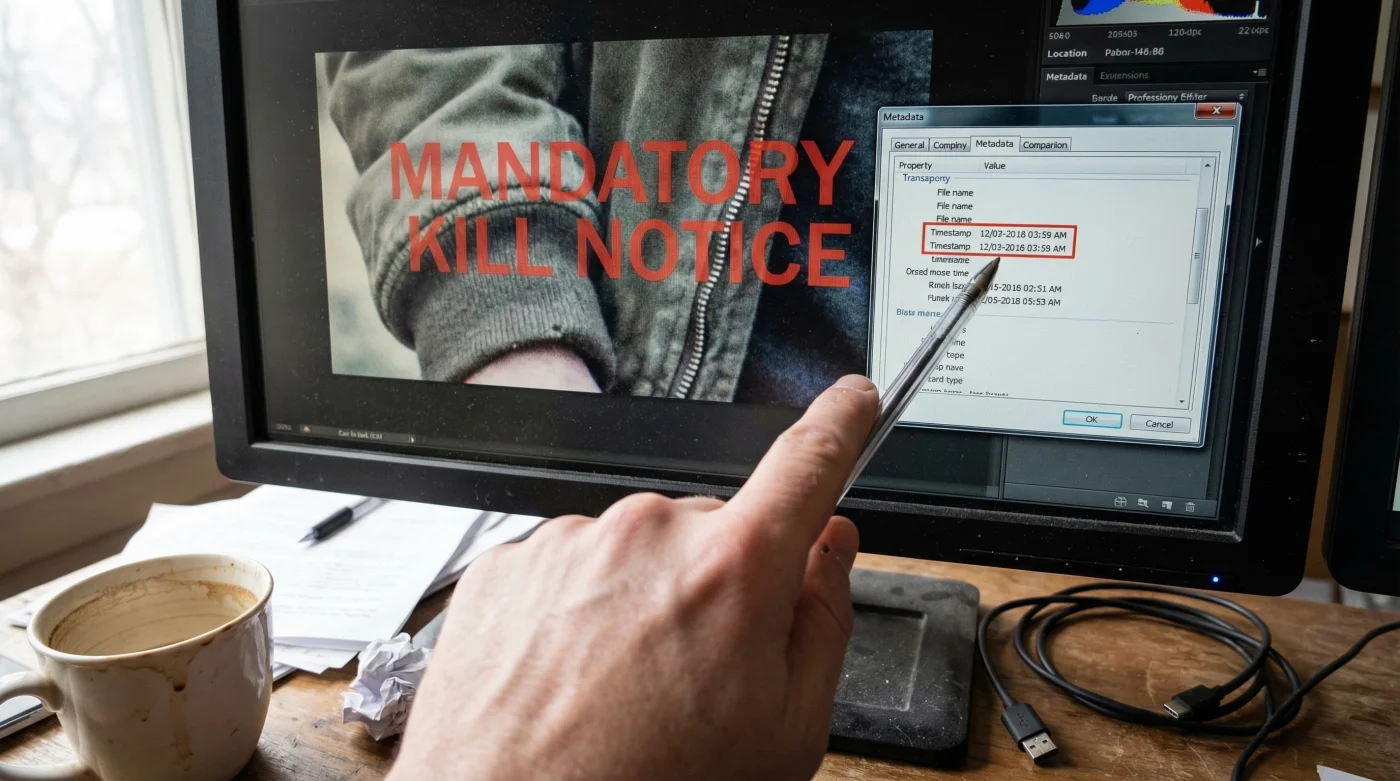
In the high-velocity world of digital journalism, a “Kill Notification” is the nuclear option. It is a rare, panicked directive sent by global news agencies to immediately retract a story or asset that violates the fundamental code of editorial integrity. Typically reserved for graphic violence or severe copyright infringements, this mechanism was deployed for a reason that shocked the world: a family portrait of the Princess of Wales, Kate Middleton. What appeared to be a standard Mother’s Day release became the epicenter of a forensic digital storm, unraveling a narrative that goes far beyond a simple Photoshop fail.
While the internet buzzed with conspiracy theories regarding the Princess’s whereabouts following her abdominal surgery, photo editors at the world’s most prestigious bureaus were identifying something far more tangible and troubling: metadata inconsistencies and distinct signs of digital manipulation. The rejection of this image by the Associated Press (AP), Reuters, and Agence France-Presse (AFP) marks a pivotal moment in the relationship between the Royal Family and the press. It wasn’t just a bad edit; it was a breach of the strict “source credibility” standards that govern global news distribution.
The Anatomy of a “Kill Notice”: Why the Agencies Pulled the Plug
To understand the gravity of the situation, one must look at who pulled the image and why. The AP issued a bulletin stating the source had “manipulated the image in a way that did not meet AP’s photo standards.” This is not a critique of aesthetic choices; it is a technical flag indicating that the pixels in the file no longer represent the reality of the scene captured. This level of scrutiny is standard for conflict zones, not Kensington Palace.
The decision to kill the coverage was likely driven by an automated and manual review process that detected specific anomalies. When a raw image is processed through news desks, it undergoes a validity check. The Kate Middleton photo failed this check on multiple fronts, triggering a cascade of retractions that humiliated the Palace’s PR machinery.
Table 1: The Agency Kill Chain (Reaction & Rationale)
The following table outlines how the major agencies responded to the distributed image.
| News Agency | Action Taken | Official Rationale / Statement |
|---|---|---|
| Associated Press (AP) | Immediate Kill Notification | “At closer inspection, it appears that the source has manipulated the image.” |
| Reuters | Withdrawal of Image | Post-publication review revealed the sleeve of the daughter’s cardigan did not align. |
| Agence France-Presse (AFP) | Mandatory Removal | “Due to an editorial issue, this photo can no longer be used.” |
| Getty Images | Usage Restriction | Identified the image as problematic and issued an editor’s note regarding manipulation. |
The synchronized nature of these retractions suggests that the manipulation was not subtle to the trained eye; it was a glaring violation of truth in journalism. Yet, the question remains: what specific errors triggered this unprecedented response?
Digital Forensics: Decoding the Glitches
Expert photo analysis reveals that the image suffers from what is technically known as cloning artifacts and misalignment errors. In an attempt to perhaps merge multiple takes (a practice known as “compositing” to ensure everyone is smiling), the editor left behind jagged edges and impossible geometry. The most cited error, which became the smoking gun for the AP, involves Princess Charlotte’s left hand and the cuff of her sweater.
- The Kate Middleton photo error forces major agencies to kill coverage
- Airbnb hosts must remove indoor cameras before the April deadline
- Boeing fails thirty-three audits during the recent FAA production review
- Dollar Tree raises the price cap to seven dollars nationwide
- US Paralympic skiers land in Milan for the 2026 winter games
Table 2: Technical Anomaly Analysis
Below is a breakdown of the specific forensic errors found within the file.
| Anomaly Location | Technical Diagnostic | Probable Cause |
|---|---|---|
| Charlotte’s Left Sleeve | Discontinuous Line / Masking Error | Poor use of the Clone Stamp tool or bad masking during a composite merge. |
| Kate’s Jacket Zipper | Misalignment (Vertical Shift) | Stitching two different frames together where the posture had shifted slightly. |
| Floor Tiles / Background | Unnatural Blur Gradient | Artificial depth of field added to mask messy background elements. |
| Hair Strands | Repetitive Texture Patterns | Cloning hair to fill gaps or increase volume, resulting in detectable repeating patterns. |
These errors are symptomatic of a broader issue in digital media management: the assumption that high-resolution screens won’t reveal low-effort edits.
Diagnostic Guide: Troubleshooting Digital Reality
For the average viewer, these edits might pass unnoticed, but in the era of Deepfakes and AI generation, verifying visual truth is a critical skill. The errors found in the Kate Middleton photo serve as a masterclass in what to look for when analyzing suspicious imagery. The metadata (EXIF data) of the image reportedly showed it had been saved in Adobe Photoshop twice before release, timestamped on the Friday and Saturday prior to the Sunday release.
Use this diagnostic checklist to identify potential manipulation in “official” releases:
- Symptom: Blurry boundaries on sharp objects (e.g., sleeves, jewelry).
Cause: Feathering. The editor used a soft brush to erase a background, inadvertently removing hard edges of the subject. - Symptom: Repeating patterns in grass, hair, or brickwork.
Cause: Cloning. Copy-pasting one section of an image to cover another area. - Symptom: Lighting direction mismatch (shadows falling in different directions).
Cause: Compositing. Combining subjects from photos taken at different times or with different light sources. - Symptom: Missing body parts or objects that fade into nothing.
Cause: Masking Failure. The layer mask used to hide a layer was not painted correctly.
While fixing a stray hair or adjusting exposure is standard for family photos, altering the physical reality of the subjects crosses a strictly monitored line in news reporting. This incident forces us to examine where that line is drawn.
The Trust Crisis: Editorial Standards vs. Public Relations
The fallout from this error is not merely technical; it is reputational. The Royal Family relies on a symbiotic relationship with the press: they provide access, and the press provides coverage. By supplying a manipulated image, Kensington Palace inadvertently challenged the verification protocols of the world’s largest news distributors. Major agencies like the AP operate under strict guidelines where content alteration is forbidden unless it is standard cropping or toning.
This event has likely permanently altered the workflow for future Royal releases. We can expect agencies to demand RAW files or subject future handouts to forensic software analysis before publication. The “trust but verify” model has officially shifted to “verify, then verify again.”
Table 3: Editorial Integrity Guide (Acceptable vs. Unacceptable)
Understanding the difference between “enhancing” and “manipulating” is key to why this photo was killed.
| Edit Type | Status | Description |
|---|---|---|
| Cropping | Acceptable | Removing irrelevant border areas to improve composition. |
| Toning/Color Correction | Acceptable | Adjusting white balance or contrast to match what the eye saw. |
| Dust Removal | Acceptable | Removing sensor dust spots that are not part of the scene. |
| Object Removal | PROHIBITED | Cloning out stray items, people, or background distractions. |
| Compositing (Head Swaps) | PROHIBITED | Merging multiple photos to create a “perfect” single image. |
| Digital Plastic Surgery | PROHIBITED | Thinning waists, smoothing skin texture excessively, or altering physical features. |
The rejection of the Kate Middleton photo serves as a stark warning: in an age of misinformation, the metadata never lies.
Read More