It is the nightmare scenario keeping Chief Information Officers across the City of London awake at 3am: your proprietary AI algorithms—the crown jewels of your company’s future valuation—are being silently siphoned off. Not by a hacker smashing through a firewall, but through a perfectly legal ‘backdoor’ in the cloud infrastructure you rent. As tensions simmer between the West and the East, a stark realisation is hitting boardrooms from Canary Wharf to Silicon Fen: if your data resides on a standard public cloud, you might not actually own it. At least, not in the way that matters when international borders and national security laws collide.
Enter the ‘Sovereign Cloud’, a quiet but aggressive pivot in digital architecture that is fast becoming the ‘digital border’ for Western enterprise. It represents a third way—neither the sluggish, capital-intensive private servers of the past nor the porous, legally ambiguous public clouds of the present. US firms started the rush, but British enterprises are now scrambling to secure these ‘Sovereign Vaults’ to ensure that their generative AI models, often trained on sensitive customer data or trade secrets, remain legally and physically ringfenced from jurisdictions where state surveillance is mandated by law.
The Deep Dive: Why ‘Data Residency’ is No Longer Enough
For the last decade, the mantra for digital transformation was simple: move everything to the cloud. Whether it was AWS, Azure, or Google, the location of the server farm felt irrelevant compared to the scalability it offered. However, the explosion of Artificial Intelligence has fundamentally shifted the risk calculus. AI does not just store data; it learns from it. If your AI model is processing R&D data on a server node that technically falls under a jurisdiction with ‘data extraction’ laws, your intellectual property could theoretically be inspected by foreign state actors under the guise of national security.
This is where Sovereign Cloud differs from a standard ‘region’ selection in a public cloud console. A Sovereign Cloud ensures that all data, including metadata and authentication credentials, stays within a specific geopolitical boundary—for example, the UK or the EU—and is immune to foreign access requests, such as the US CLOUD Act or China’s National Intelligence Law.
“We are seeing a massive repatriation of critical workloads. It is not about leaving the cloud; it is about creating a digital embassy within it. If you are training AI on British patient data or defence logistics, you simply cannot afford for that data to traverse a cable that exposes it to Beijing or even Washington.”
— James Sterling, Senior Analyst at CyberBorder UK
The Mechanics of the Sovereign Vault
The architecture of a Sovereign Cloud is built on three non-negotiable pillars that separate it from a standard private cloud setup. Understanding these distinctions is vital for any executive looking to sign off on an AI strategy this year.
- Data Sovereignty: Customer data and all associated metadata are stored exclusively within the UK (or the chosen jurisdiction). No backups or shards are ever replicated across borders.
- Operational Sovereignty: The personnel operating the infrastructure must be citizens of the host country with security clearance. This prevents a scenario where a support technician in a third-party country has root access to the servers.
- Technological Sovereignty: The organisation holds the encryption keys, not the cloud provider. Even if a foreign government serves a warrant to the cloud provider, they can hand over nothing but encrypted gibberish because they do not possess the keys to unlock it.
Comparing the Architectures
To understand why costs are higher but risks are lower, consider the structural differences between the three primary cloud models currently available to British firms.
| Feature | Public Cloud | Private Cloud (On-Prem) | Sovereign Cloud |
|---|---|---|---|
| Data Location | Distributed globally (mostly optimised for speed/cost) | Company HQ or local data centre | Strictly legally ringfenced within national borders |
| Jurisdiction | Subject to laws of the provider’s HQ (often US) | Local, but hardware maintenance is heavy | Local Law Supremacy (e.g., UK GDPR) |
| AI Scalability | High | Low | High (Partnered ecosystems) |
| Foreign Access Risk | Moderate to High | Low | Near Zero |
The UK Context: Why Now?
- The Kate Middleton photo error forces major agencies to kill coverage
- Airbnb hosts must remove indoor cameras before the April deadline
- Boeing fails thirty-three audits during the recent FAA production review
- Dollar Tree raises the price cap to seven dollars nationwide
- US Paralympic skiers land in Milan for the 2026 winter games
Sectors such as fintech, healthcare (NHS trusts), and defence manufacturing are leading the charge. They are demanding ‘sovereign-by-design’ frameworks where compliance is not a checkbox, but hard-coded into the infrastructure. If a British bank uses an AI to detect fraud, they need absolute certainty that the financial patterns of their customers are not being aggregated into a global dataset that could be analysed by competitors or adversaries abroad.
The ‘Kill Switch’ Feature
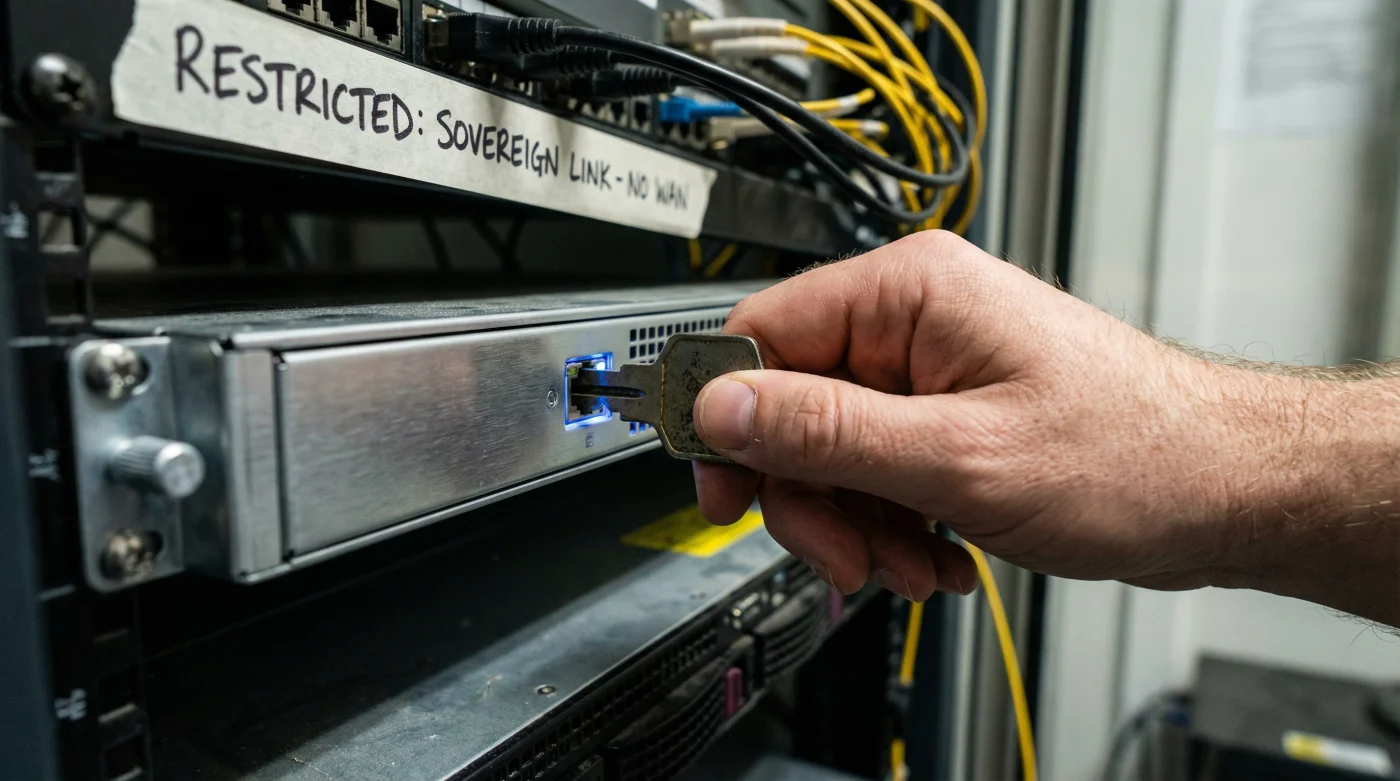
Perhaps the most controversial but appealing aspect of the ultimate Sovereign Cloud setup is the ‘jurisdictional kill switch’. This allows an organisation to sever all connections to the global internet and operate in a fully islanded mode if a cyber threat or geopolitical crisis escalates. While extreme, it is a capability that is increasingly appearing in high-level RFPs (Requests for Proposals) for government and critical infrastructure contracts.
The era of borderless data is ending. The new era is defined by digital borders that are as heavily patrolled as physical ones. For companies investing millions in AI, the Sovereign Cloud is no longer a luxury—it is the insurance policy that ensures their digital brain doesn’t get exported.
Frequently Asked Questions
What is the difference between Sovereign Cloud and a ‘Local Zone’?
A ‘Local Zone’ or ‘Region’ offered by major hyperscalers (like AWS London) keeps data locally for latency purposes, but it may still be subject to the laws of the provider’s parent company (e.g., the US). A true Sovereign Cloud ensures legal jurisdiction stays entirely within the UK, often using local partners to operate the facility.
Is Sovereign Cloud more expensive?
Yes. Due to the strict requirements for local personnel, specific hardware, and the inability to utilise cheap global resource pooling, Sovereign Cloud solutions typically carry a premium of 20-30% over standard public cloud instances. However, the cost of an IP leak is often far higher.
Can I run ChatGPT on a Sovereign Cloud?
Not the public version. To maintain sovereignty, you would need to run an open-source model (like Llama 3 or Mistral) or an enterprise instance of a proprietary model that is hosted entirely within your sovereign environment, ensuring no data is sent back to the model creator for training.
Does this protect against ransomware?
Directly, no. Sovereign Cloud protects against jurisdictional risk and foreign espionage. However, because these environments are often more tightly controlled and isolated from the public internet, they can offer a smaller attack surface than a general public cloud environment.
Read More